 EN
EN

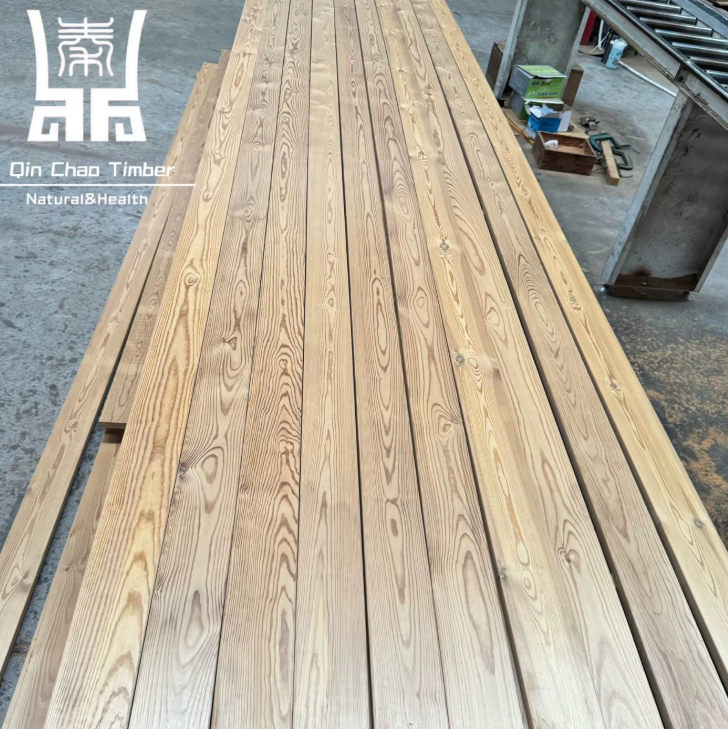
Superior Dimensional Stability and Moisture Resistance
How Thermal Modification Lowers Equilibrium Moisture Content by Up to 50%
When wood undergoes thermal modification at temperatures between 180 and 230 degrees Celsius, it gains remarkable dimensional stability because the heat changes how the cells inside look. This happens mainly because hemicellulose breaks down during processing. Hemicellulose is what makes regular wood absorb so much water. After treatment, the wood holds about half as much moisture as normal wood when left outside. That means it expands and contracts far less over time, even if exposed constantly to rain, high humidity levels, or big temperature differences day to night. What's really interesting is how the heat actually rearranges the cell walls to form something like a water resistant shield. This shield stops large amounts of water from getting in but still lets vapor pass through naturally. Finding this right balance between waterproofing and breathability matters a lot for materials used on building exteriors where they need to last years without rotting away.
Real-World Performance: Minimal Warping and Swelling in Coastal and Humid Environments
Real world testing backs up these claims. Thermal modification makes the cladding expand by under 2% even when exposed to high humidity conditions. That's actually pretty impressive compared to regular untreated wood which can expand anywhere between 5 to 8 times more. We've seen installations along coastlines where the material stays almost completely flat after sitting through five years of salty air and rain. The reason? The treated wood just doesn't absorb much moisture at all, so those annoying issues like warping and cracking don't happen. Most pressure treated woods only protect the outer layer, but thermal modification changes the wood chemistry throughout. This means the whole board performs consistently for decades, often lasting well over 25 years without needing replacement.
Natural Durability: Decay, Rot, and Pest Resistance Without Chemicals
Wood that's been heat treated offers lasting protection against biological damage without needing harmful chemicals. When wood goes through high temperature treatment around 180 to 230 degrees Celsius, it loses much of its hemicellulose content along with other substances that fungi need to grow. This basically turns the wood into something that doesn't support microbial activity anymore. Testing by third parties confirms these woods meet EN 350 Class 1-2 standards which are considered top notch when talking about natural durability. That puts them right up there with some of the toughest woods on the planet when it comes to resisting rot over time.
Fungal Resistance (EN 350 Class 1–2) via Hemicellulose Breakdown at 180–230℃
Laboratory trials show thermally modified wood suffers 95% less mass loss than untreated specimens when exposed to Coniophora puteana, the benchmark brown rot fungus. This structural transformation enables reliable decades-long service in high-moisture applications where conventional woods rapidly deteriorate.
Proven Termite Deterrence in ASTM D143 Field Trials
ASTM D143-compliant field trials demonstrate near-total termite avoidance:
- 98% survival rate after five years in active subterranean termite zones
- Zero structural compromise observed across coastal test sites
Commercial products consistently reduce termite attack rates by 90% versus untreated softwoods (2023 field data). Combined with its decay resistance, this chemical-free durability supports a verified 25+ year service life (FPInnovations, 2022)—more than double that of conventional softwoods—and makes it ideal for ecologically sensitive uses like freshwater docks and residential exteriors.
Long-Term Aesthetic Performance and UV Resilience
Controlled Patination: Uniform Silvery-Gray Weathering vs. Surface Degradation
When wood gets thermally treated, it develops a nice silver gray color when exposed to sunlight instead of the patchy discoloration, cracks on the surface, and worn fibers we see in regular untreated wood. The reason for this consistent aging process is because the heat treatment stabilizes the lignin in the wood structure. This makes the wood much better at handling UV damage while still keeping its strength intact. Another benefit comes from lower levels of hemicellulose after treatment, which means less breakdown happens when exposed to light. As a result, the wood stays dimensionally stable and looks good for many years without needing any special care like sanding, staining, or applying chemicals.
Reduced Lifecycle Costs Through Low Maintenance and Extended Service Life
25+ Year Service Life vs. 10–15 Years for Untreated Softwoods (FPInnovations, 2022)
Using thermally modified wood can cut down on the overall costs of exterior cladding quite a bit, not only because it lasts longer but also because it performs better over time. Regular untreated softwoods usually need replacing somewhere between 10 to 15 years later on account of rotting away and problems caused by expansion and contraction. The thermally treated version holds up structurally and looks good too for well over 25 years. What makes this possible? The treatment changes the wood at its very core. There's less hemicellulose present, the cellulose becomes more crystalline, and the lignin gets stabilized throughout all this happens without needing any kind of coating or chemical additives. According to research published by FPInnovations back in 2022, if we look at everything including materials themselves, labor costs involved, plus what happens at the end when disposing of old materials, then thermally modified wood actually saves around 40 to 60 percent in total expenses compared to regular softwood options. That makes thermal modification an excellent choice where people want something valuable yet requires minimal maintenance across both big buildings and smaller homes alike.
 REQUEST AN ESTIMATE
 Products