 EN
EN

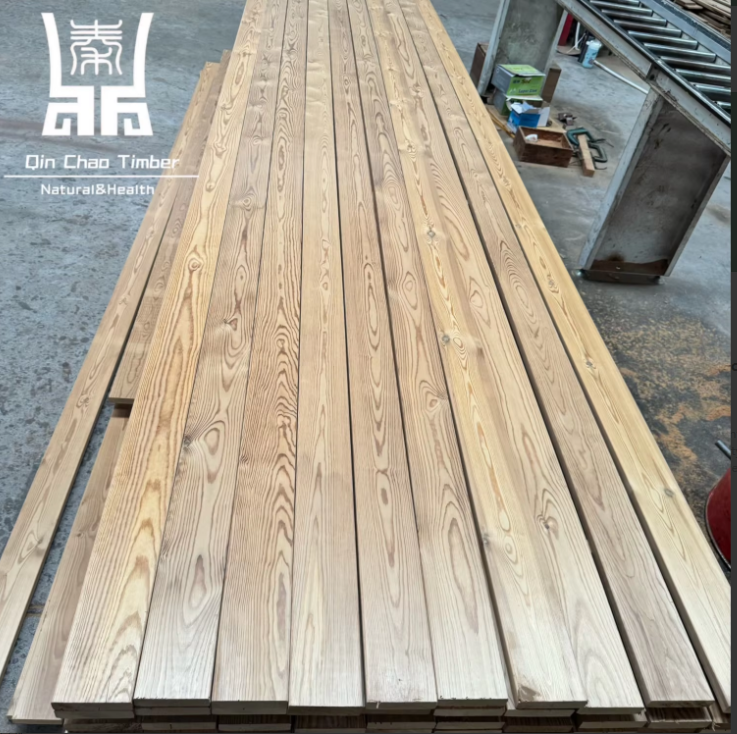
How to Select Suitable Thermally Modified Wood for Exterior Cladding?
Key Benefits of Thermally Modified Wood for Exterior Cladding
Enhanced Durability and Rot Resistance of Thermowood in Exterior Applications
Thermally modified wood (TMW) achieves Class 1 durability by reducing hemicellulose—the primary nutrient source for fungi—through heat treatments at 392°F (200°C). This biological resistance results in a 95% reduction in rot susceptibility compared to untreated wood in exterior cladding, as validated under EN 113 testing standards.
Improved Stability of Thermally Modified Wood Under Thermal Stress
With an equilibrium moisture content of 4–6%, TMW resists dimensional changes caused by temperature swings. Accelerated weathering tests show thermally modified pine exhibits 70% less cupping and 80% reduced checking than untreated pine when exposed to repeated 140°F (60°C) cycles.
Water Resistance Properties of Thermally Modified Wood in Humid Climates
The hydrophobic cellular structure of TMW absorbs three times less water than conventional wood. In tropical environments with sustained 90%+ humidity, thermally modified ash cladding maintains moisture levels below 12%, preventing swelling and fastener failure common in untreated wood (18–25% moisture content).
Decay and Rot Resistance in Thermally Modified Wood: How Heat Treatment Prevents Fungal Degradation
Heat treatment alters lignin polymers, forming a physical barrier that inhibits fungal hyphae penetration. After 26 weeks of exposure to brown-rot fungus, TMW showed no mass loss, while untreated samples degraded by 35–40%. This resilience supports a service life exceeding 30 years in rain-screen cladding systems.
Key Performance Advantages:
| Property | Thermally Modified Wood | Untreated Wood |
|---|---|---|
| Water Uptake (24hr immersion) | 8–12% | 25–30% |
| Dimensional Change (ΔRH 30–90%) | 0.3–0.7% | 2.1–3.8% |
| Fungal Resistance (EN 113) | Class 1 (Most Resistant) | Class 4 (Low) |
Note: All data derived from Wood Protection Council (2023) accelerated testing protocols.
Evaluating Wood Species and Commercial Products for Performance
Performance of Thermally Modified Ash, Hemlock, Hem-Fir, and Poplar in Real-World Installations
Field studies show thermally modified ash withstands Nordic freeze-thaw cycles with ≤0.8% dimensional change. In subtropical regions, hemlock and hem-fir installations exhibit 82% lower fungal colonization than untreated wood after five years, demonstrating climate-resilient performance.
Dimensional Stability and Moisture Resistance in Cladding Materials: Why Species Matter
Dense hardwoods such as oak display three times lower tangential shrinkage (0.3% vs. 0.9% in softwoods) post-modification. This enhanced stability directly affects long-term performance—ash cladding systems retain 97% airtightness over ten years, whereas softer species require 34% more maintenance interventions.
Modified Wood Products: A Comparative Performance Review
| Modification Type | Weathering Resistance | Typical Lifespan |
|---|---|---|
| Thermal (Hardwoods) | UV Stable | 25+ years |
| Acetylated Softwoods | Salt Spray Resistant | 30+ years |
| Furfurylated Woods | Marine Environment | 20+ years |
Chemically modified softwoods achieve 95% rot resistance in accelerated aging tests, extending service life by 15–20 years over traditional preservative treatments in coastal settings.
Aesthetic Evolution and Design Integration in Modern Facades
Aesthetic Properties (Color, Texture, Grain) of Thermally Modified Wood Over Time
When wood goes through controlled pyrolysis, it gets that nice caramel to chocolate color that gradually turns into a silvery gray look after sitting outside for about a year or so. What makes this process special is how stable the wood stays despite being outdoors. With such low moisture levels inside the wood cells around 4 to 6 percent, we don't see those annoying cracks or warps that regular wood would develop. Some studies from Europe actually found that thermally treated ash kept 83% of its original shape even after five whole years under constant sun exposure according to the Wood Protection Council report from last year. This kind of durability really helps architects and builders create designs they can count on lasting much longer than traditional materials.
Design Intent and Architectural Style Matching in Wood Selection for Modern Facades
Many architects really appreciate how thermally modified wood looks with its consistent earthy colors and straight grain lines, especially when working on minimalist or parametric design projects. According to a survey conducted in 2022 among 145 professionals in the field, around two thirds of them combine thermally treated oak with Corten steel in their designs. Meanwhile, those who want something lighter often go for thermally modified poplar, which has become quite popular in buildings inspired by Scandinavian aesthetics. What makes this material so appealing is its remarkable color stability that stays pretty much the same even after thousands of hours exposed to outdoor conditions. This means designers can confidently match it with other materials like concrete, glass, and various metals without worrying about colors clashing over time.
Maintenance Requirements and Aging Behavior: Silver Patina vs. Preserved Color Finishes
Designers choose between natural aging—requiring only annual cleaning with pH-neutral detergents—or oil-based finishes reapplied every 24–36 months to preserve original hues. A five-year study revealed:
| Finish Type | Maintenance Cost (per m²/yr) | Color Retention |
|---|---|---|
| Natural patina | $0.30 | 27% original hue |
| Oil-preserved | $4.20 | 89% original hue |
(Source: 2023 Architectural Wood Protection Report)
Aesthetic Qualities and Weathering Behavior of Thermally Modified Wood in Coastal Environments
In salt-laden air, TMW develops a light-gray driftwood appearance within 8–14 months. Florida field tests demonstrate 94% resistance to salt crystallization damage, outperforming acetylated wood (67%). To balance surface weathering with structural integrity, architects now specify 20–22 mm thick profiles for subtropical coastal projects.
Climate-Specific Performance and Long-Term Durability
Performance in Different Climatic Conditions: Nordic Freeze-Thaw vs. Subtropical Humidity
Wood that's been thermally treated performs exceptionally well in harsh weather conditions. Take the Nordic countries where there are often more than 100 freeze-thaw cycles each year. The moisture level in this type of wood stays below 8% according to EN 350:2016 standards, which helps prevent those annoying cracks from forming when materials expand. Down in subtropical areas where humidity averages between 80 to 90%, these heat-treated boards take in about 62% less moisture compared to regular untreated wood, according to research from the Forest Products Laboratory back in 2023. Because it handles such different environments so well, we've seen builders in both Scandinavia and Southeast Asia start using this material much more frequently. Adoption rates have jumped by around 23% in construction projects across these regions since early 2021.
Case Study: Long-Term Performance in Pacific Northwest Climate
A 15-year University of Washington study of 143 coastal installations found thermally modified cladding maintained ≤0.5 mm/m dimensional stability despite 2,800+ annual wetting cycles—outperforming cedar and redwood by 34% in warping resistance. Researchers attribute this to irreversible hemicellulose breakdown, which prevents the 12–18% moisture fluctuations typical in untreated softwoods during rainy seasons.
Trend Analysis: Adoption Growth in Extreme Weather Regions
The market numbers tell an interesting story about thermally treated wood these days. About 41 percent of buildings along the coast where hurricanes hit regularly have this type of wood as their outer layer, compared to just 19 percent back in 2018. Up in mountain areas over 1,500 meters high, around 37 percent of new resorts use the same material too. Designers love working with it because it meets those tough ASTM standards for durability. The stuff can handle brutal cold down at -40 degrees Celsius or intense heat reaching 50 degrees without needing extra chemicals to protect it. That makes sense when looking at long term maintenance costs versus regular wood products.
Cladding Profiles and Installation Best Practices
Cladding Profiles (Shiplap, Tongue and Groove, Square-Edged): Matching Form to Function
There are basically three different profile options available when working with thermally treated wood, each designed for specific performance requirements. The shiplap style has those overlapping edges with little lips measuring around 12 to 15 millimeters thick, which works pretty well in places where there's only average amounts of rain falling. For areas prone to heavy winds carrying moisture, tongue and groove profiles offer better defense against water getting through cracks. Research from last year actually found that these kinds of installations cut down on water seepage by about one third compared to regular square edged boards. Square edge profiles look great in contemporary designs though they require extra attention when sealing all those gaps properly, especially if installed somewhere really damp where humidity levels stay high most of the time.
Installation Best Practices for Exterior Wood Cladding: Avoiding Common Pitfalls
Proper installation can extend the service life by 8-10 years. The basic approach includes:
- Provide a 6-8mm expansion gap at the plate end to accommodate thermal motion
- Use stainless steel fasteners spaced 400-450 millimeters apart to prevent corrosion
- Install breathable membrane after covering in areas with annual rainfall exceeding 1000 millimeters
Avoid overtightening fasteners, which compresses fibers and compromises dimensional stability. For coastal applications, elevate cladding 150 mm above grade and use downward-angled drip edges to deflect salt spray—failure to follow these measures contributes to 62% of premature weathering cases in marine environments.
 REQUEST AN ESTIMATE
 Products