 EN
EN
Key Thermally Modified Wood Species for Decking: Pros and Limitations
Top Performers: Ash, Pine, and Spruce in Real-World Decking Applications
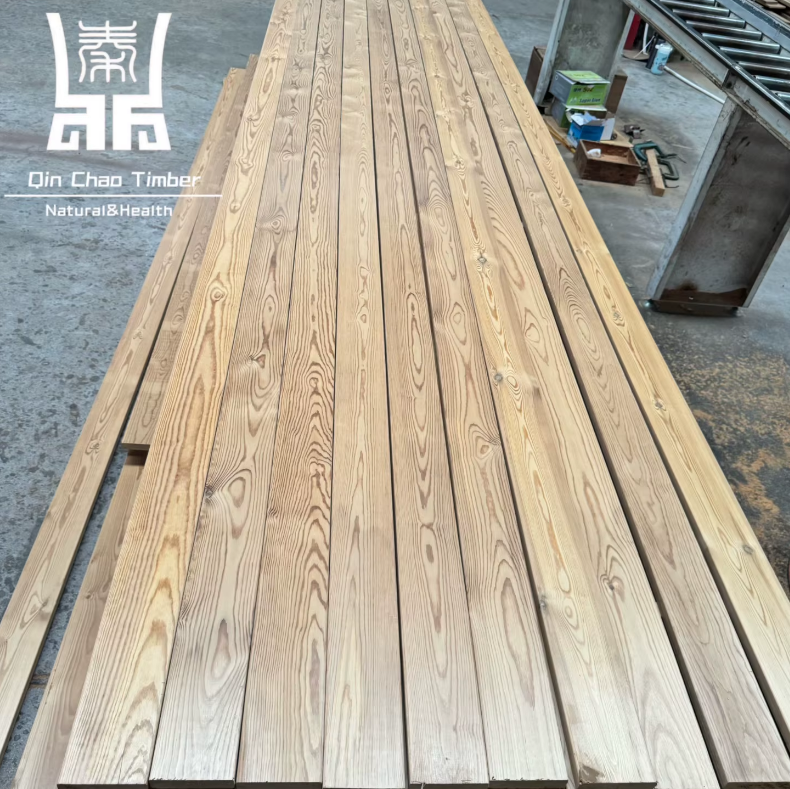
Ash stands out among woods for thermal modification because of its open grain pattern that lets heat penetrate deeply and evenly across the boards. Tests according to EN 15654-1 show these boards soak up less than 8% water, which means they don't swell much over time and stay aligned better in the long run. When it comes to getting good value for money, pine especially Radiata makes sense after modification. It hits Class 2 durability standards set by EN 350-2, so it works well even when placed directly on the ground where both budget and quality matter. Spruce handles thermal treatment really well too, showing very little warping or cracking compared to many other softwoods we see in the market. Real world observations indicate that after sitting outside for about five years, all three types still have less than half a percent shrinkage along their length. That's roughly three times better stability than regular untreated wood. Weighing between 450 to 550 kilograms per cubic meter, these woods strike a nice balance between being easy to work with during installation while maintaining enough strength for reliable joins and connections. Makes them great choices for everything from simple backyard decks to sophisticated commercial projects.
Why Oak and Softwoods Like Hemlock or Poplar Are Rarely Recommended for Thermally Modified Wood Decking
The high tannin levels in oak really mess with getting consistent results from thermal modifications. What happens is surface checking occurs pretty regularly, plus the wood tends to weather in all sorts of unpredictable ways. After treatment, oak cells get real brittle too. Impact resistance drops by around 40% compared to regular untreated wood which makes people worry about using it on busy decks or anywhere heavy loads might be placed. Hemlock and poplar are even trickier problems. These woods start off lighter than 400 kg per cubic meter and have weird grain patterns. When they go through thermal processing, moisture gets absorbed unevenly inside them. This creates stress points within the wood itself that eventually show up as warping or twisting when installed. Take modified poplar for instance it usually needs replacing about half as long as ash or pine would last under similar conditions outside. Another issue comes from lacking natural resins in these woods. Without those protective compounds, UV damage sets in faster leading to quicker graying and breakdown unless someone keeps up with constant maintenance. If longevity matters outdoors, most professionals stick to wood types that have uniform cell structures since they behave much better during standard thermal treatments.
Critical Performance Metrics for Thermally Modified Wood Decking
Water Absorption, Swelling, and Dimensional Stability (EN 15654-1)
When wood undergoes thermal modification, it gets better at handling moisture because this process breaks down hemicellulose, which is what makes wood attract water in the first place. The difference is pretty significant actually. Decking that's been thermally treated shows only about 0.3 to 0.7 percent dimensional changes when humidity levels swing between 30 and 90 percent relative humidity. Regular untreated wood meanwhile experiences changes ranging from 2.1 to 3.8 percent. That means there's roughly a 70 percent improvement, which helps prevent problems like warping boards, gaps forming between planks, and screws coming loose over time. Another benefit? The equilibrium moisture content goes way down to around 4 to 6 percent. This limits how much water the wood can soak up during rainy weather or when humidity spikes. Tests where people immerse samples in water show something else interesting too. Thermal modified pine takes in about 60 percent less water after sitting submerged for 24 straight hours compared to regular pine that hasn't gone through any treatment.
| Performance Metric | Thermally Modified Wood | Untreated Wood |
|---|---|---|
| Water Uptake (24hr immersion) | 8–12% | 25–30% |
| Dimensional Change (ΔRH 30–90%) | 0.3–0.7% | 2.1–3.8% |
Decay Resistance Classifications and Real-World Durability (EN 350-2)
When thermal modification removes hemicellulose, which serves as food for decay fungi, it boosts wood's durability classification all the way to Class 1 according to EN 350-2 standards. That's actually the top possible rating for biological resistance. Wood treated this way shows about 95 percent less chance of rotting when tested using the accelerated methods described in EN 113 compared to regular Class 4 untreated wood. Field tests conducted in subtropical regions found that after just five years of constant outdoor exposure, there was an impressive 82% reduction in fungal growth on modified wood samples. What makes this particularly valuable is that the protective qualities stay intact even when exposed to sunlight or subjected to frequent cycles of drying out and getting wet again. Real world installations have proven these materials last between 25 to 40 years in various climate conditions including temperate zones, humid areas, and places where freezing and thawing happen regularly. And best of all, none of this requires adding chemicals or maintenance treatments over time.
Beyond Density: What Actually Determines Thermally Modified Wood Decking Longevity?
The Misconception That Higher Density Equals Better Decking Performance
Looking at density alone won't tell much about how thermally modified decking actually performs. Tropical hardwoods get their strength from being naturally dense, but when we talk about thermal modification, things work differently. This process focuses on breaking down hemicellulose instead of just looking at weight. What happens is the wood loses its attraction to moisture and gets rid of what fungi need to grow. That's why even softer woods like pine can reach Class 1 durability standards after modification (EN 350-2), sometimes beating out heavier, unmodified hardwoods. What really matters isn't so much how heavy the wood is for its size, but how deep and uniform the thermal treatment goes. When moisture content drops below 6%, the wood basically stops reacting with biology around it and stays stable in shape no matter what kind of wood it started as.
How Thermal Modification Depth and Process Consistency Impact Surface Integrity and UV Resistance
The long term durability really depends on how deep the modifications go, not just what happens on the surface. Studies show that good protection needs heat penetration of around 12mm minimum to stop moisture getting trapped inside the material. When there's too much moisture in the core area, different parts expand at different rates which leads to problems like peeling or cracking. Temperature control in the kiln matters just as much. If temperatures drift more than plus or minus 5 degrees Celsius during heating above 210 degrees, it messes up the lignin polymerization process. This causes uneven changes in the cell walls. These inconsistencies make materials less resistant to UV damage and speed up surface cracks forming. On the flip side, when manufacturers keep their processes tightly controlled, they get better molecular organization throughout the material. This actually improves UV resistance because the lignin molecules link together properly, all while keeping the structure stable even after multiple heating and cooling cycles.
Certification, Standards, and Quality Assurance for Thermally Modified Wood Decking
Getting third party certification and sticking to industry standards really matters when we want reliable long term results from thermally modified wood decks. Generic heat treated woods just don't have that same level of process control compared to certified options like those backed by the International ThermoWood Association (ITWA). Their certified products actually follow specific protocols that have been checked and balanced according to European EN standards. These standards specify exact temperatures, how much steam gets applied, and how long the treatment lasts so we get consistent results across the board regarding how stable the wood remains dimensionally (EN 15654-1), its ability to resist rotting away over time (EN 350-2), and how well it handles moisture. When manufacturers skip these steps, their batches vary wildly from one production run to another, which means customers might end up with warped boards or ones that crack early on or simply start breaking down faster than expected. Independent testing isn't just paperwork either it lets companies offer those extended 25 plus year warranties while proving their materials can stand up to weather changes, sun damage, and whatever bugs might try eating them. For anyone building something meant to last outdoors for years, proper certification isn't optional it's basically the gold standard of quality assurance.
FAQ Section
What is the process of thermal modification in wood?
Thermal modification involves heating wood to high temperatures to alter its physical and chemical properties, increasing its resilience to moisture and decay.
Why are ash, pine, and spruce preferred for thermal modification?
Ash, pine, and spruce respond well to thermal treatment due to their grain structure and density, offering excellent stability and resistance to warping.
Why is oak not recommended for thermally modified wood decking?
Oak contains high tannin levels, which complicate thermal modification by causing surface issues and brittleness, reducing its impact resistance.
What factors affect the durability of thermally modified wood decking?
Factors include the depth of modification, process consistency, and adherence to recognized standards ensuring material stability against moisture and UV damage.
How does thermal modification enhance wood's decay resistance?
The process breaks down hemicellulose, reducing the wood's moisture attraction and making it less hospitable to decay-fungi, achieving high decay resistance.
Table of Contents
- Key Thermally Modified Wood Species for Decking: Pros and Limitations
- Critical Performance Metrics for Thermally Modified Wood Decking
- Beyond Density: What Actually Determines Thermally Modified Wood Decking Longevity?
- Certification, Standards, and Quality Assurance for Thermally Modified Wood Decking
-
FAQ Section
- What is the process of thermal modification in wood?
- Why are ash, pine, and spruce preferred for thermal modification?
- Why is oak not recommended for thermally modified wood decking?
- What factors affect the durability of thermally modified wood decking?
- How does thermal modification enhance wood's decay resistance?
 REQUEST AN ESTIMATE
 Products