 EN
EN

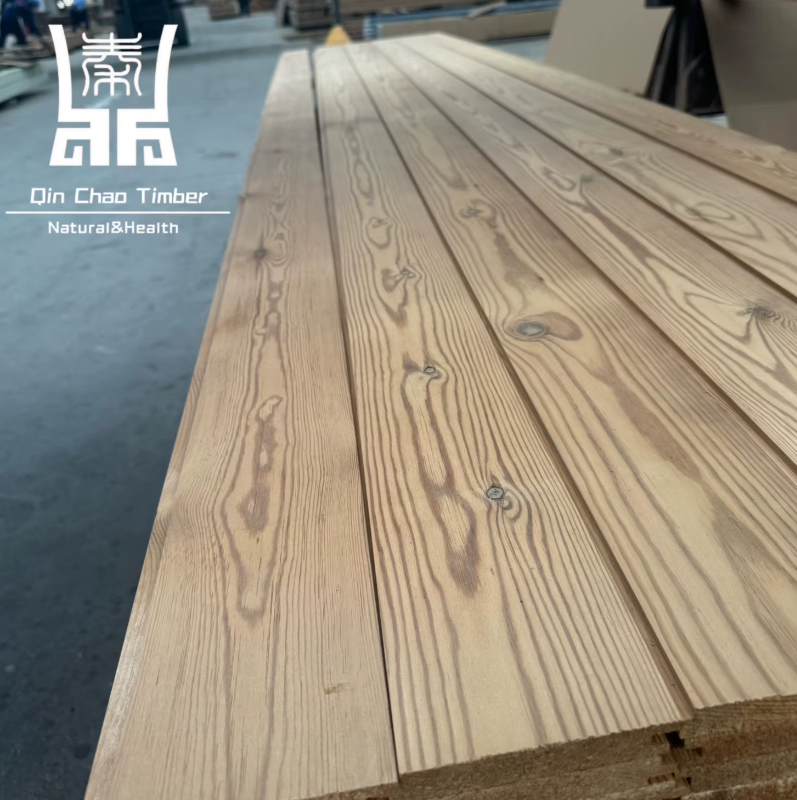
How to Pick Thermally Modified Wood for Exterior Cladding?
Why Thermally Modified Wood Excels for Exterior Cladding
Dimensional Stability and Moisture Resistance in Outdoor Exposure
Thermally modified wood, often called TMW, offers remarkable dimensional stability when used as exterior cladding because of chemical changes that happen during the heating process. The wood gets treated at around 200 degrees Celsius inside special kilns where steam levels are carefully controlled. This treatment lowers the wood's moisture content to somewhere between 4 and 6 percent, which means it doesn't expand or contract as much as regular wood would. What happens is that the hemicelluloses break down these are basically what makes wood absorb water so TMW shows about 70 percent less warping and roughly 80 percent fewer cracks on the surface compared to untreated wood when exposed to changing temperatures and humidity levels. Because of this built-in stability, buildings stay structurally sound longer and panels remain aligned properly even in tough environments like seaside areas or places with high humidity throughout the year.
Enhanced Rot and Insect Resistance: Understanding Class 1 Durability Ratings
When wood undergoes thermal modification, it gets rid of hemicelluloses which are basically what feeds those pesky decay fungi and wood boring insects, all without needing any chemical preservatives. This process means that thermally modified wood (TMW) hits Class 1 durability according to EN 350:2016 standards, which happens to be the top mark given in Europe for how well materials resist biological breakdown naturally. Tests following EN 113 show around 95% less chance of rotting than regular untreated timber, though results can vary depending on specific conditions. What's interesting is that the lignin structure changes during this heating process, making the wood more water resistant. This limits how much moisture can get into the material and messes with the environment fungi need to grow, something that makes TMW particularly good for exterior cladding applications where protection from weather is critical.
Chemical-Free Modification: Sustainable Performance Gains for Exterior Cladding
Thermal modification works by applying just heat and steam to treat wood. No need for those nasty chemicals like biocides, heavy metals, copper azole, or creosote that many traditional treatments rely on. What makes this method so great? Well, it keeps the wood recyclable at the end of its life cycle, which is pretty important when we think about waste management issues today. Plus, there's less carbon footprint built into the product throughout its entire lifespan compared to chemically treated alternatives. The TMW process meets all sorts of strict environmental standards too. Think Declare Label and Cradle to Cradle Bronze certifications, stuff that actually helps builders earn points under systems like LEED v4.1 and BREEAM. Sustainability isn't just tacked onto TMW as some marketing gimmick; it's woven right into how the material performs from day one.
Top Wood Species for Thermally Modified Exterior Cladding
Oak, Ash, and Radiata Pine: Performance Comparison for Long-Term Exterior Cladding
Oak that's been thermally modified packs a punch when it comes to density, sitting around 700 to 750 kg per cubic meter, and doesn't move much at all. That makes it great choice for building facades that need to perform well across different weather conditions. Ash wood strikes a nice balance between strength and weight, typically measuring between 680 and 710 kg per cubic meter. What's interesting is how it gradually takes on this beautiful silvery gray color as time passes. Radiata pine starts off softer than the others, usually around 500 to 550 kg per cubic meter, but after modification becomes surprisingly resistant to decay. For big projects where budget matters, this makes radiata pine quite attractive despite its initial softness. All these woods hit Class 1 durability standards according to EN 350 testing, which means they last about five times longer than their untreated counterparts when exposed to soil contact situations during testing.
| Characteristic | Oak | Ash | Radiata Pine |
|---|---|---|---|
| Density (kg/m³) | 700–750 | 680–710 | 500–550 |
| Decay Resistance | Excellent | Very High | High |
| Stability | Minimal movement | Moderate movement | Requires careful installation |
Brand Benchmarks: Leading Thermally Modified Systems — Real-World Exterior Cladding Data
Top-tier thermally modified wood systems—such as Thermory, Kebony, and variants—demonstrate field-validated performance in rigorous exterior applications. Third-party data from North European coastal exposure trials shows 99.5% retention of fastener pull-out strength after 10 years. Critical metrics include:
- Moisture resistance: Sustained equilibrium moisture content ≤12% across seasonal humidity swings
- Dimensional stability: ≤0.5% tangential shrinkage following ASTM D1037 accelerated weathering
- UV response: Uniform, non-checking graying observed across all surfaces in 36-month real-world monitoring
These systems meet EN 350 durability requirements while eliminating resin bleed, surface mold growth, and differential aging—common failure modes in conventional cladding.
Designing with Thermally Modified Wood: Aesthetics and Aging Behavior
Color Evolution, UV Response, and Patina Development on Exterior Cladding Surfaces
When thermally modified wood is used for outside cladding, it goes through an aging process that's pretty consistent and looks good together over time. The initial warm brown colors tend to fade out slowly into this nice soft grayish look after being exposed to sunlight. People really appreciate how this change gives buildings that rustic charm while still needing almost no maintenance work. Regular wood without treatment often turns gray in patches or breaks down faster than expected. But because TMW has this special cell structure that's been stabilized, the color changes happen evenly on every part of the wood surface. Architects love this because their designs stay true to what they wanted without having to worry about applying paint or doing touch ups later on.
Grain, Texture, and Architectural Harmony: Aligning Material Aging with Design Intent
When wood undergoes thermal treatment, it actually brings out deeper grain patterns and creates a smoother surface feel all while keeping the wood strong enough for real world applications. The striking medullary rays in oak and the straight lines of ash grain really stand out as they age, giving surfaces more character both visually and when touched. More architects these days are picking specific wood types because of how they change over time. Coarser grained woods work great for buildings that want to blend into natural surroundings, whereas finer grains fit better with modern designs where clean lines matter most. Getting this right means the exterior isn't just something that lasts forever but grows with the building itself, developing its own unique story through exposure to weather and seasons.
Installation Essentials for Optimal Exterior Cladding Performance
Proper installation is essential to unlock thermally modified wood's full performance potential. Three evidence-based practices mitigate the most common causes of premature cladding failure:
-
Sealing joints and penetrations with manufacturer-approved, flexible sealants prevents moisture bridging—critical because TMW, while highly stable, remains hygroscopic at the microstructural level. Unsealed gaps can lead to localized saturation and interstitial condensation (Building Science Corporation, Exterior Wall Moisture Management, 2024).
-
Maintaining a ventilated rainscreen cavity of 6–10 mm behind the cladding promotes continuous airflow, enabling rapid drying of any incidental moisture. This drainage gap is not optional—it is the primary defense against trapped moisture, the leading contributor to long-term decay in wood facades.
-
Using compatible fasteners and flashings, such as A4 stainless steel or marine-grade aluminum alloys, avoids galvanic corrosion and staining. Thermal modification does not alter wood's pH or extractive content, but its low-moisture state increases sensitivity to incompatible metals—making material compatibility verification non-negotiable.
When these protocols are followed, TMW's inherent stability, durability, and aesthetic resilience translate directly into decades of high-performing, low-intervention exterior cladding.
FAQ Section
What is thermally modified wood (TMW)?
TMW is wood treated at high temperatures in controlled environments to improve its durability, stability, and resistance to rot and insects without using chemicals.
Why is TMW suitable for exterior cladding?
Due to its improved dimensional stability, moisture resistance, and Class 1 durability rating, TMW performs well in harsh environmental conditions, making it ideal for exterior applications.
What are the sustainability benefits of TMW?
TMW is chemical-free and retains its recyclability, leading to a lower carbon footprint and meeting strict environmental standards, making it a sustainable option for builders seeking green certifications like LEED.
Which wood species are best for thermally modified cladding?
Oak, ash, and radiata pine are preferred for their performance in decay resistance and stability when thermally modified.
What are key installation practices for TMW cladding?
Key practices include sealing joints to prevent moisture, maintaining a ventilated rainscreen cavity for airflow, and using compatible fasteners to prevent corrosion.
 REQUEST AN ESTIMATE
 Products